The Issue: Prairie Families Bear Costs That Are Never Counted

THE ISSUE AND ADDRESS
The Pattern
There is a recurring pattern in how federal policy interacts with British Columbia, Alberta, Saskatchewan, and Manitoba.
A new program is announced. Funding is allocated nationally. Eligibility criteria are set. And somewhere in the technical details — the enrolment cutoff date, the income threshold, the regional weighting formula, the provincial agreement timeline — a gap opens. A group of people who were supposed to be covered finds out they are not.
This happens not because of malice. It happens because the data and assumptions used to design the policy were built around a different Canada — larger cities, higher population density, stronger union representation, greater proximity to federal decision-makers.
Prairie families have learned to absorb these gaps quietly. The distances are large. The communities are small. The political weight is limited.
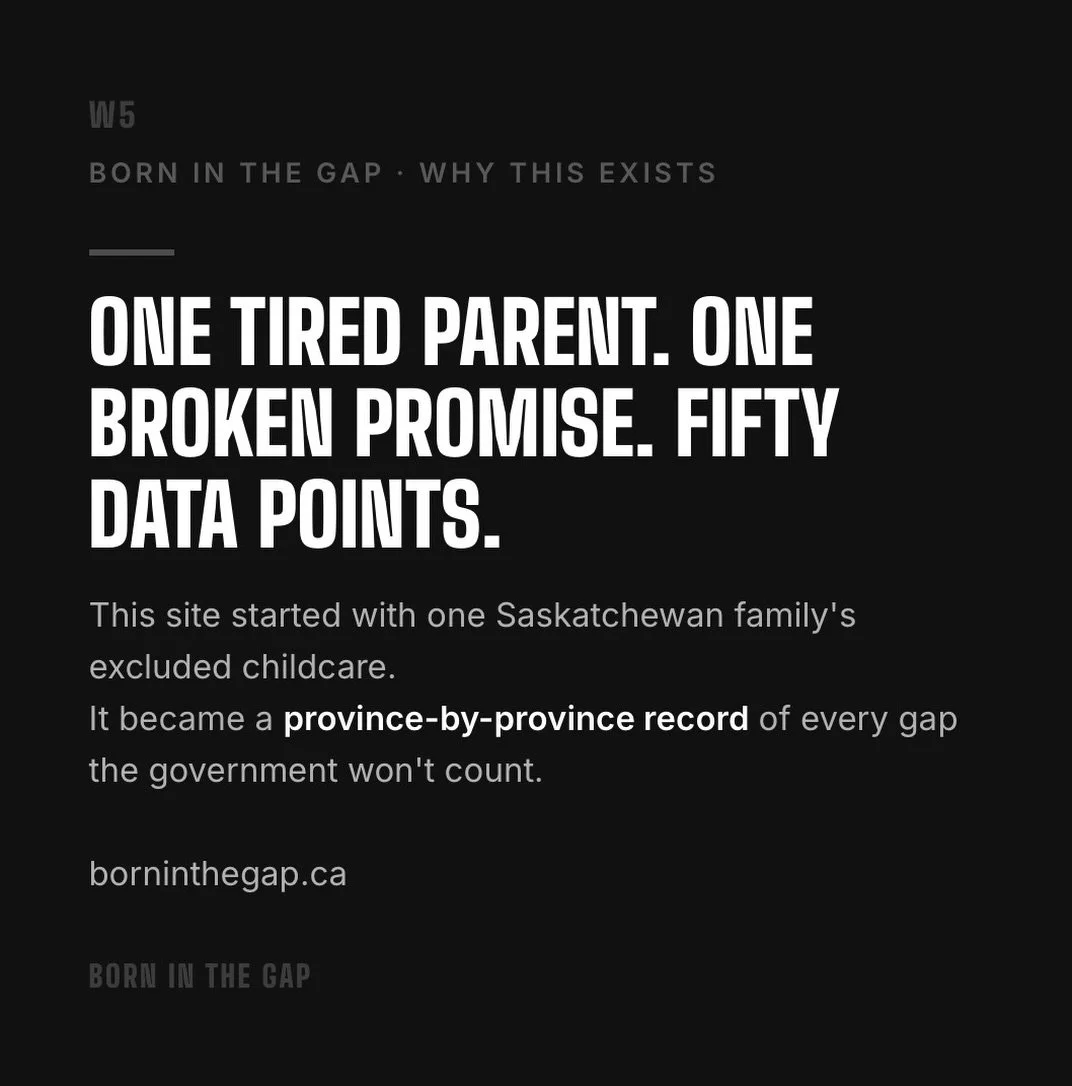
Born in the Gap argues this absorption has a cost — and that cost belongs on the government's ledger, not families'.
The Specific Issues We Are Addressing
1. Childcare Policy Gaps — The Birth Date Exclusion
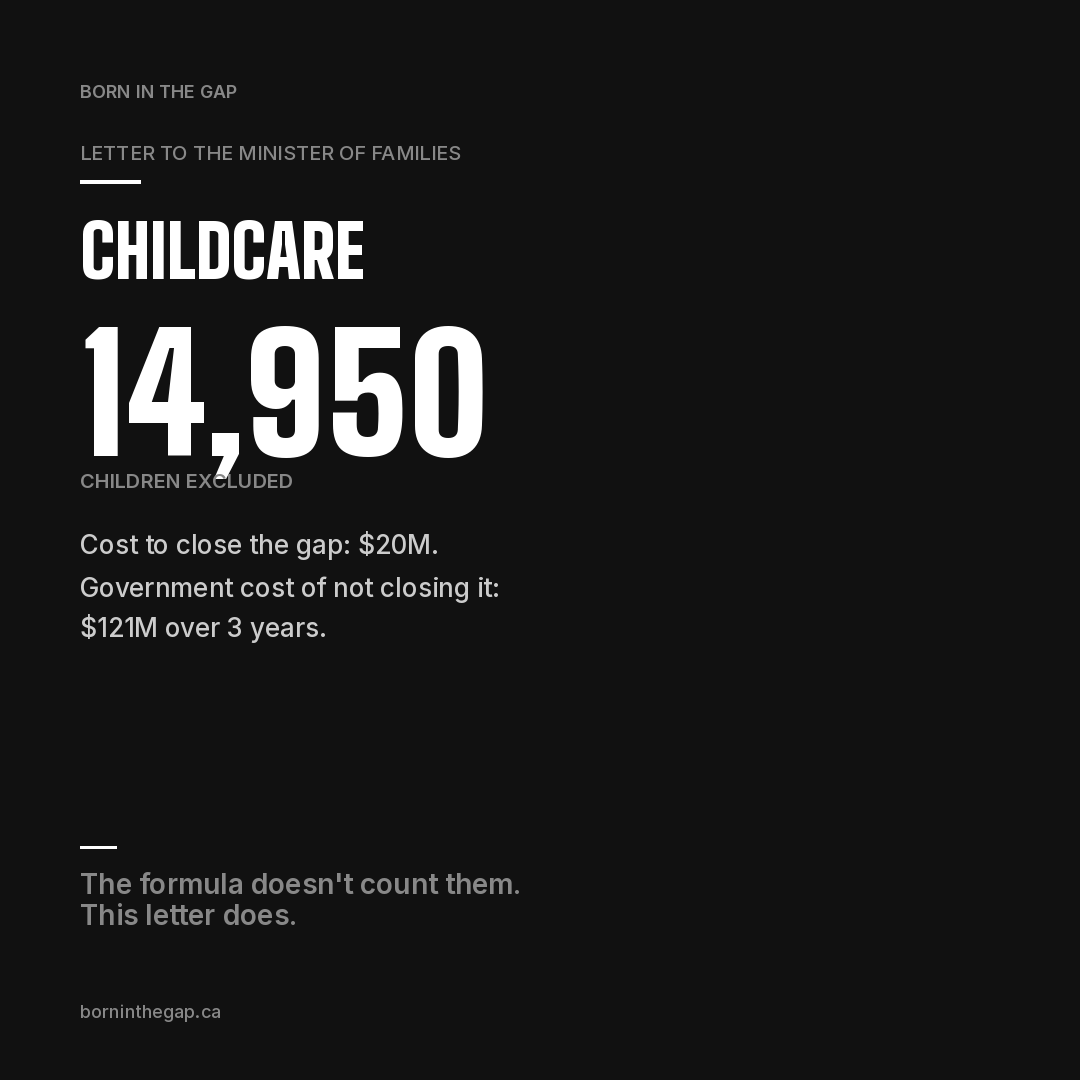
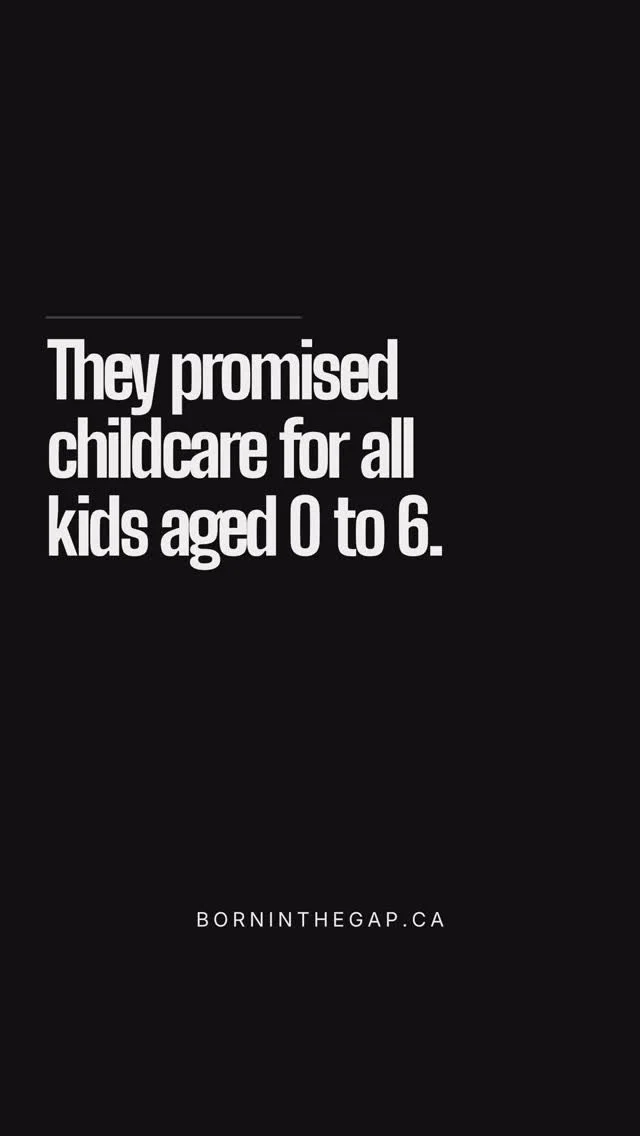
Saskatchewan's January–March 2020 birth cohort was excluded from the renewed CWELCC agreement's kindergarten-age extension — approximately 3,250 children. Similar timeline-based exclusions exist in Alberta and Manitoba under their respective provincial childcare agreements.
The federal government's own program language states that childcare access promotes workforce participation, particularly for mothers. The exclusion of these cohorts does the opposite — and the downstream costs are borne by the families, not the program budget.
Ask: Retroactive transitional subsidies for excluded kindergarten-age cohorts in all four provinces, tied to the 2025–26 school year. Estimated combined cost: under $20M. Estimated downstream savings: $60M+ over three years.
2. Health Transfer Underfunding in Lower-Population Provinces
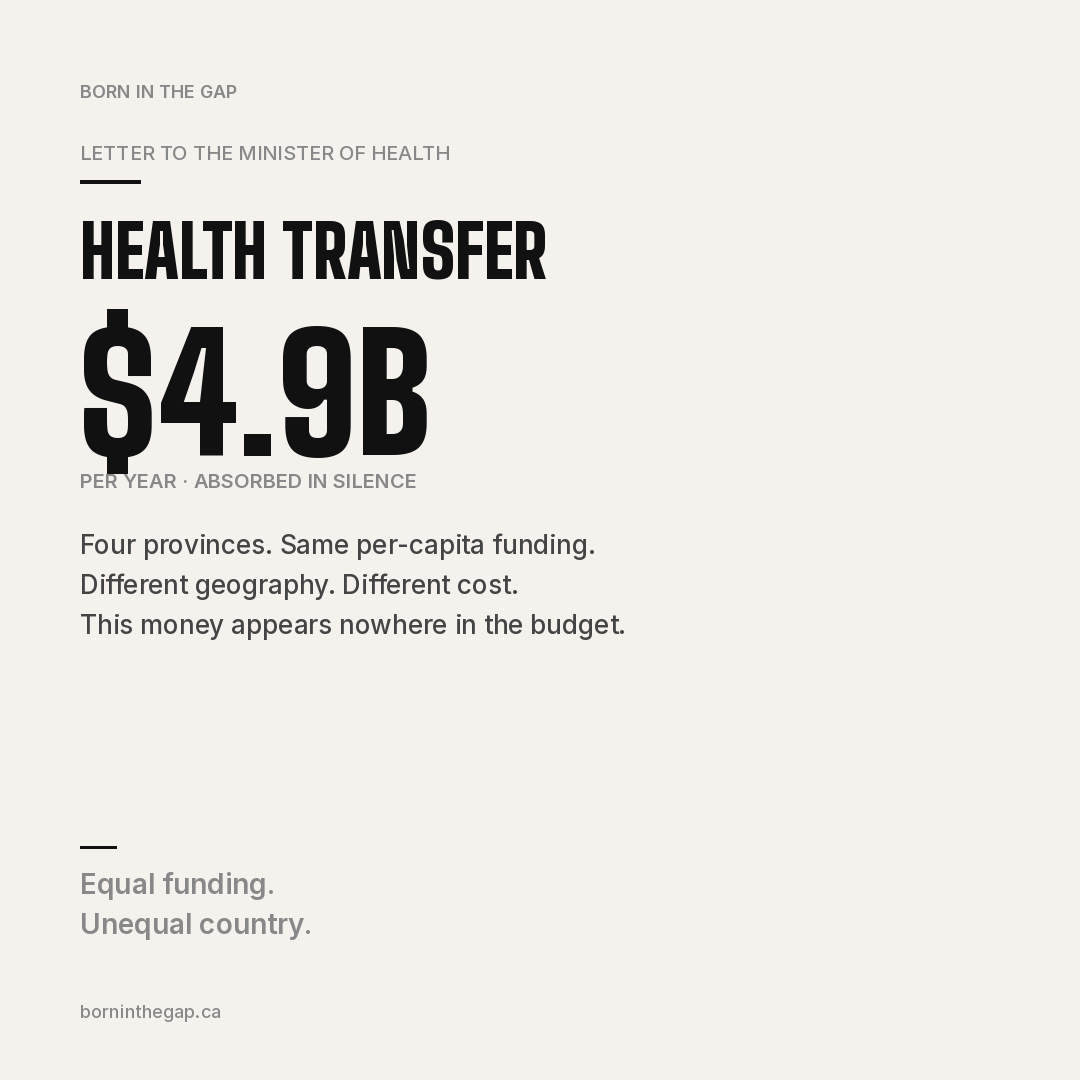
The Canada Health Transfer (CHT) is distributed on a per-capita basis. In principle, this is equitable. In practice, it disadvantages provinces with lower population density because the cost of delivering care per person is significantly higher when hospitals are 200km apart and specialist wait times are measured in months, not weeks.
Saskatchewan has 12.7 physicians per 1,000 residents versus Ontario's 19.4. Manitoba's rural emergency department capacity has declined 23% since 2015. These are not coincidences — they are the predictable outcome of funding formulas that treat a patient in Winnipeg the same as a patient in Regina when the infrastructure cost to serve them is not the same.
Ask: A population-density adjustment factor in the CHT formula, modelled on the approach used for northern and remote communities, extended to include provinces below a defined population-per-square-kilometre threshold.
3. Energy Cost and Carbon Policy Asymmetry
The federal carbon pricing framework applies uniformly across provinces, but its economic impact is not uniform. In British Columbia, Alberta, Saskatchewan, and Manitoba, the combination of colder winters, greater driving distances, and higher dependence on heating fuel means carbon pricing represents a proportionally larger share of household income than in southern Ontario or urban Quebec.
The rural fuel exemption is partial and inconsistently applied. The Climate Action Incentive Payment does not fully offset the cost differential for prairie households at the median income level.
Ask: A prairie climate cost differential study — commissioned through Statistics Canada — quantifying the per-household carbon pricing burden by province and rural/urban classification, with recommendations for rebate adjustment. Transparency first. Then policy change.
4. Housing Affordability — The Invisible Prairie Crisis
National housing affordability conversations are anchored to Vancouver and Toronto prices. This distorts the picture in two directions at once: it makes federal programs appear more generous than they are for families in Saskatoon, Regina, and Lethbridge (where incomes are lower and program thresholds were built around higher benchmark markets), and it makes the prairie housing crisis invisible to federal analysts.
Regina's average rent has increased 34% since 2021. Saskatoon's rental vacancy rate sits below 2%. First-time buyers in Winnipeg are competing for housing in a market where the First Home Buyer Incentive thresholds were calibrated for cities with $400,000+ average home prices — pricing out exactly the families the program was supposed to help.
Ask: Regional recalibration of housing program thresholds and income limits to reflect actual local market conditions, reviewed annually using CMHC provincial benchmark data rather than national averages.
Letters for Change Written for you
-
![]()
Childcare Federal Minister Letter
-
![]()
Health Transfer Minister Letter
-
![]()
Food Insecurity Letter
-
![]()
MP General Concerns Letter
-
![]()
Pharmacare Minister Letter

Let’s not forget who is effected most.
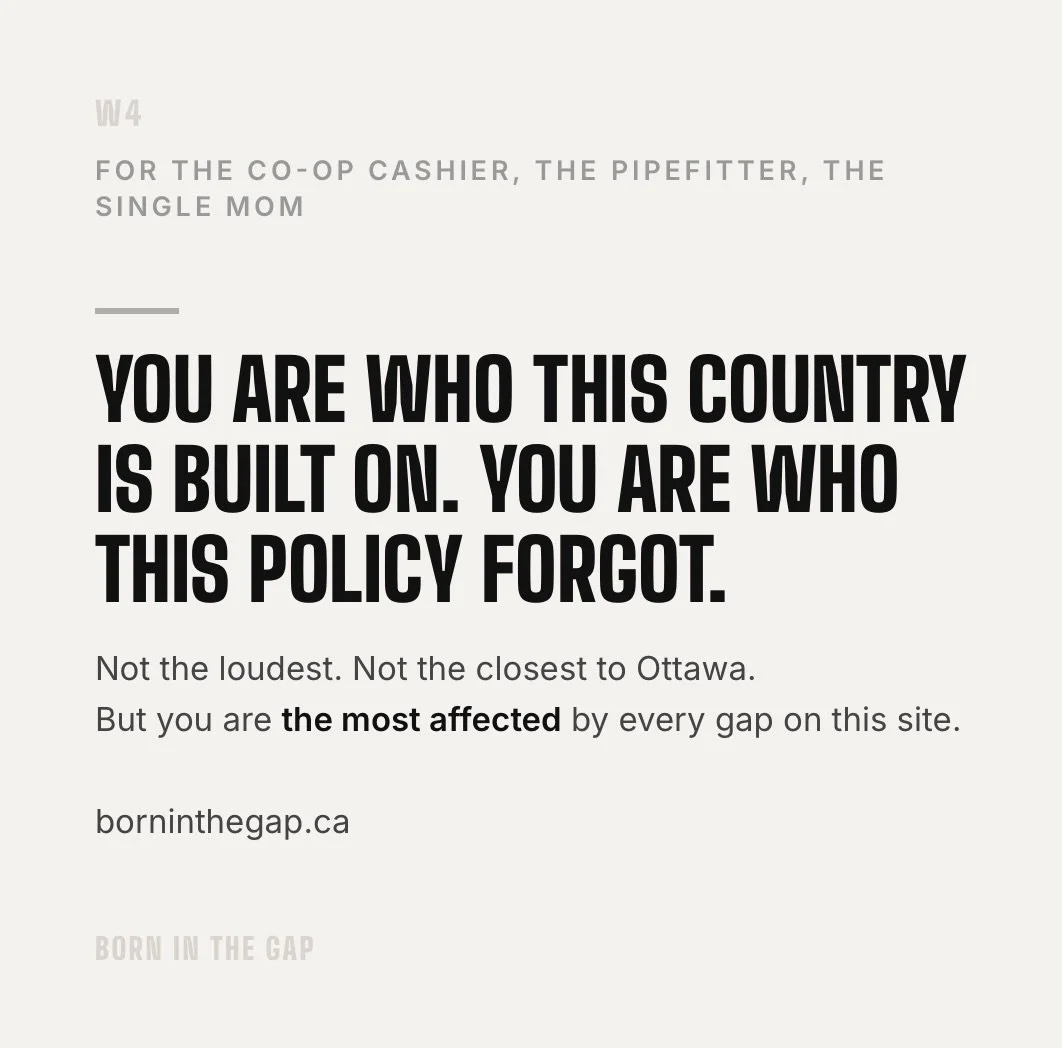
The families carrying the largest share of unaddressed policy gaps in the prairie provinces are not the most economically vulnerable — who are served by targeted programs — and not the most economically secure — who can absorb the cost. They are the households in the middle.
Two-income families where both adults are working to keep pace with rising costs. Single parents who built their financial plan around a childcare subsidy or housing program they were told they qualified for. Rural residents for whom the nearest service point is an hour's drive and the wait time is months.
These families do not have lobbyists. They do not have the time or proximity to Parliament Hill to make their case in person. They have us.