Your Province Runs on Your Losses
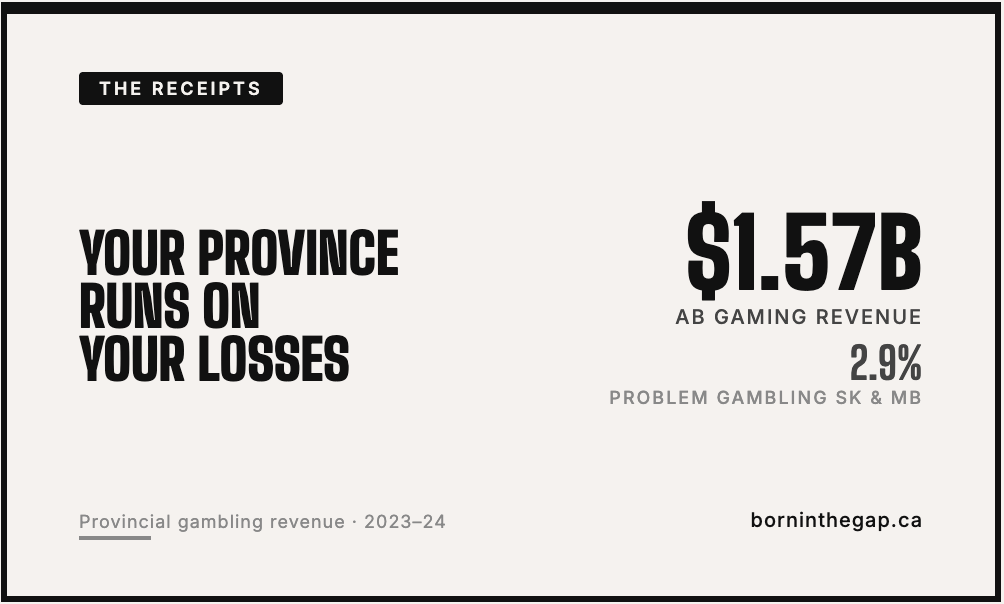
Alberta gaming revenue hit $1.57 billion in fiscal 2023-24. That's a new record. The government celebrated it like a business milestone. It was a record in extraction from people experiencing problem gambling.
Saskatchewan and Manitoba are tied for the highest problem gambling rates in the country at 2.9%. That means nearly one in thirty-five residents meets the criteria for gambling disorder. The governments of those provinces collect revenue from that disorder. They're the house, the regulator, and the profit-taker.
This is the policy gap nobody discusses. Provincial governments have created a dependency on gambling revenue while simultaneously acknowledging a public health crisis they're not equipped to manage.
14,950 Children the Formula Forgot
The $10-a-day childcare program was supposed to reach every child in Canada. It didn't. Not because it ran out of money. Because the formula never accounted for them in the first place.
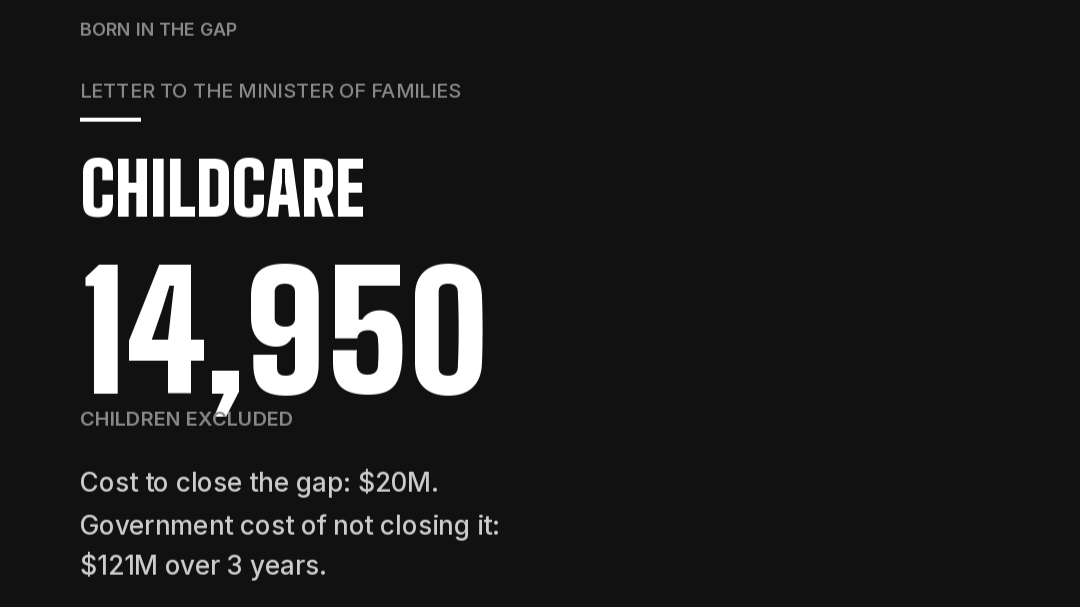
Across Alberta, Saskatchewan, and Manitoba, 14,950 children are functionally excluded from federal childcare funding. They live in the gaps between how federal policy was designed and how rural, remote, and First Nations communities actually work.
This is what policy design that doesn't talk to real families looks like.
It Started With Childcare
I don't have a PhD in policy. I have a spreadsheet, two kids, and a lot of anger.
This is how Born in the Gap started: I was trying to find licensed childcare in Saskatchewan. Not fancy childcare. Not elite childcare. Just the kind where my kids wouldn't be in someone's basement for thirteen hours a day while I worked.
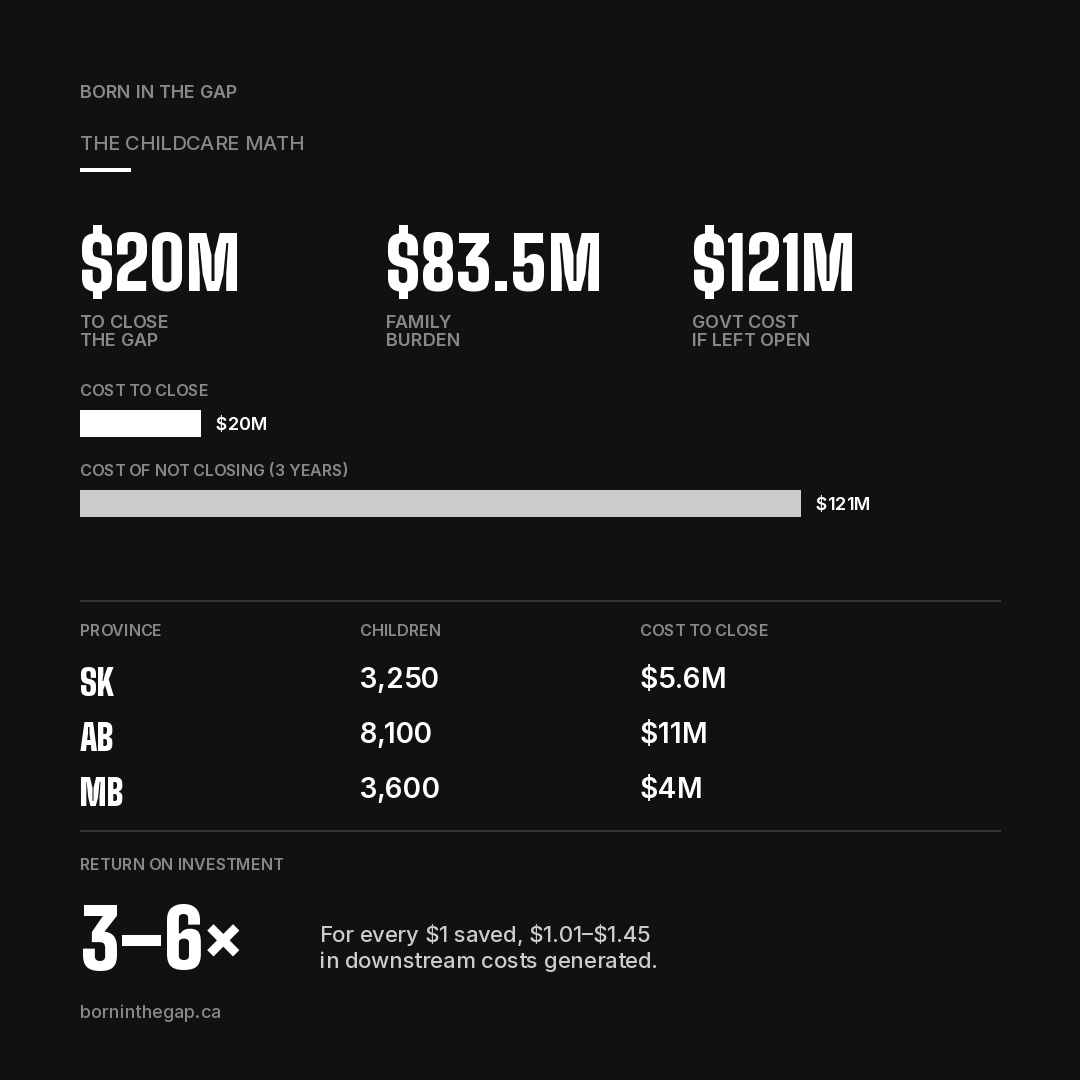
I found 3,250 Saskatchewan children locked out of the federal childcare funding formula. Not waitlisted. Not underserved. Functionally excluded from the $10-a-day program because they live in rural areas, on First Nations, or in provinces where the infrastructure hasn't caught up.
That number made me angry. But what made me dig deeper was realizing it wasn't unique to childcare.